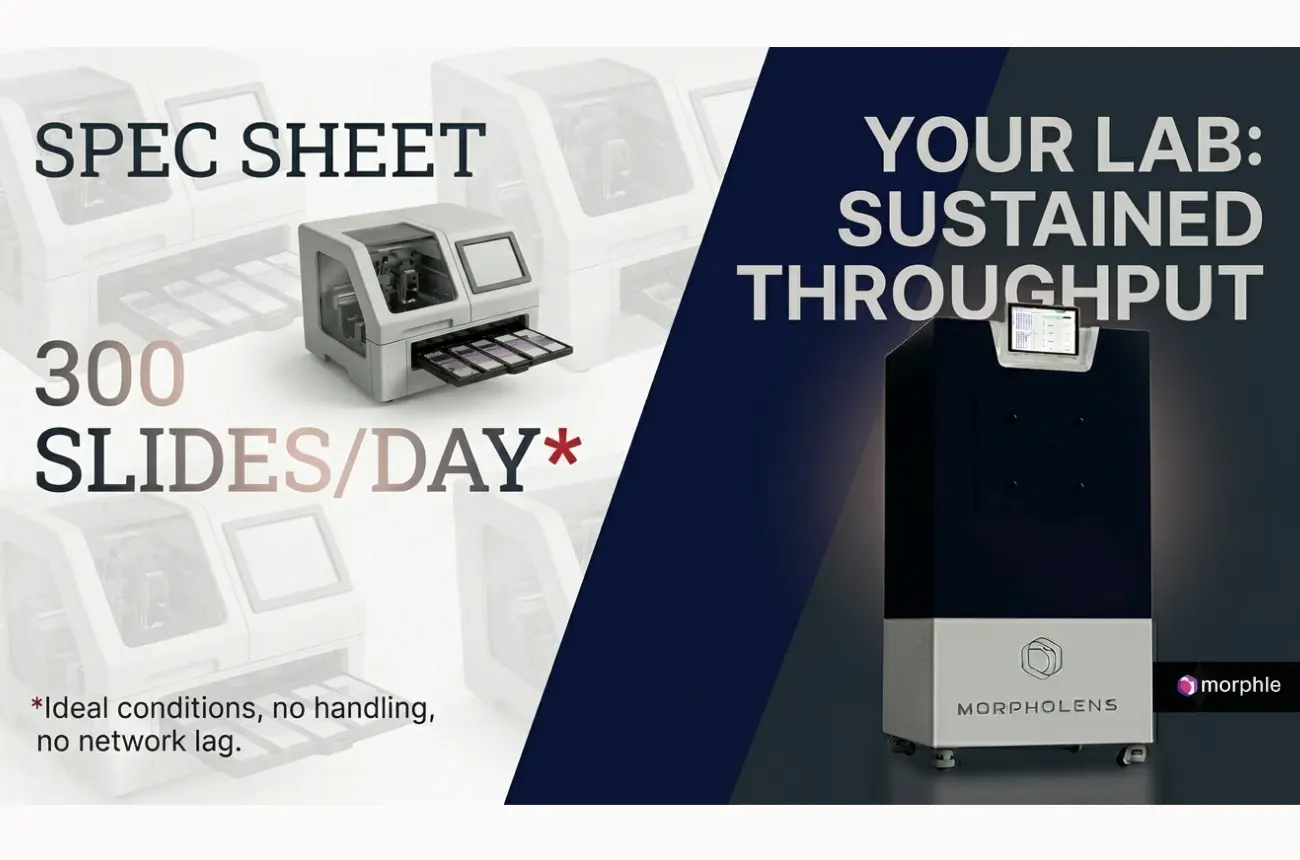
Digital pathology has clear advantages; speed, remote access, and workflow visibility; but many labs underestimate the hidden costs associated with implementing digital pathology scanners. Beyond the initial investment, budgets must account for storage, software, IT infrastructure, maintenance, up-time expectations, and workflow optimization . This blog outlines the true financial picture so pathology teams can plan confidently and avoid surprises.
Digital Pathology Scanners
High-resolution devices that convert glass slides into digital files for diagnosis, education, tele-pathology, and AI workflows.
Whole Slide Scanning
The process of digitizing entire tissue sections at high resolution using automated scanning technology.
Slide Scanner Histology / Pathology Slide Scanner / Microscope Scanner
Terms describing scanners that capture complete histology slides as navigable digital images.
Automated Microscope Slide Scanner
A system that automatically loads, focuses, scans, and processes slides without manual intervention.
Digital Pathology Companies
Vendors who manufacture digital pathology hardware and software, often providing AI tools, viewers, and cloud platforms. Top Vendor in 2025 typically include Leica Biosystems, Roche, Morphle Labs, Hamamatsu and Phillips.
Digital pathology implementation involves several interconnected steps:
Many of these areas introduce incremental costs that labs do not foresee when calculating Digital Pathology Scanner price.
Slow scanners increase labor hours and extend turnaround time. High-throughput systems reduce per-slide operational cost, making them more budget-friendly over time.
A scanner with poor focus detection or limited compatibility creates repeated scans; doubling labor and consuming storage. Robust scanners with low rejection rates significantly reduce hidden operational costs.
Scanners that require frequent servicing indirectly increase cost through workflow interruptions. Downtime often costs more than spare parts.
Long-life, durable systems deliver better total cost of ownership.
WSI files range from hundreds of MBs to several GBs each. Over a year, whole slide scanning can produce tens of terabytes. Storage, backup, and cloud egress fees can quickly exceed hardware costs.
If the viewer is slow or un-optimized, pathologists lose minutes per slide; adding up to hours weekly and large financial losses yearly.
Servers, networking upgrades, firewalls, and cybersecurity tools must support high-speed imaging. These are essential but often omitted from initial budgets.
However, choosing the right digital pathology scanners significantly minimizes these limitations and improves ROI.
Digital pathology introduces responsibilities that have budgeting implications:
Non-compliance risks create greater liabilities than the cost of proper infrastructure.
Labs performing thousands of slides monthly benefit from scanners with consistent throughput and minimal downtime.
Bandwidth, viewer optimization, and cloud platforms become cost factors.
Large, high-resolution image sets create substantial storage needs.
Digitizing archives increases initial storage cost but saves long-term handling and microscopy overhead.
In all these areas, robust scanners reduce operational disruption and long-term expense.
When evaluating digital pathology scanners, assess:
Click here for guidance: choose-your-scanner
Digital pathology is shifting toward more predictable cost models:
Future digital pathology companies will focus heavily on reliability, uptime, and operational simplicity.
Morphle scanners are engineered for cost efficiency with:
This reduces both direct and indirect expenses throughout the scanner’s lifespan.
Choose a scanner which is right for you. Talk to the experts


.webp)
.webp)
.webp)
.webp)
.webp)
.webp)