Clinical vs Research Slide Scanners

Choosing between clinical and research slide scanners? Learn how validation, throughput, and workflow integration impact digital pathology deployments.
6 mins

Clinical vs Research Slide Scanners: What Every Pathology Lab Needs to Know

TL;DR

Choosing between a clinical and a research digital pathology scanner is one of the most important procurement decisions a pathology lab can make. Clinical scanners prioritize reliability, throughput, and regulatory compliance, while research scanners emphasize imaging precision, flexibility, and experimental workflows. This guide explains the practical differences, technical benchmarks, and evaluation criteria that help labs select the right system.

Defining the Two Categories

Not all digital pathology scanners are designed for the same environment. Understanding the intended use of the scanner—clinical diagnostics versus research—is the first step toward making the right decision.

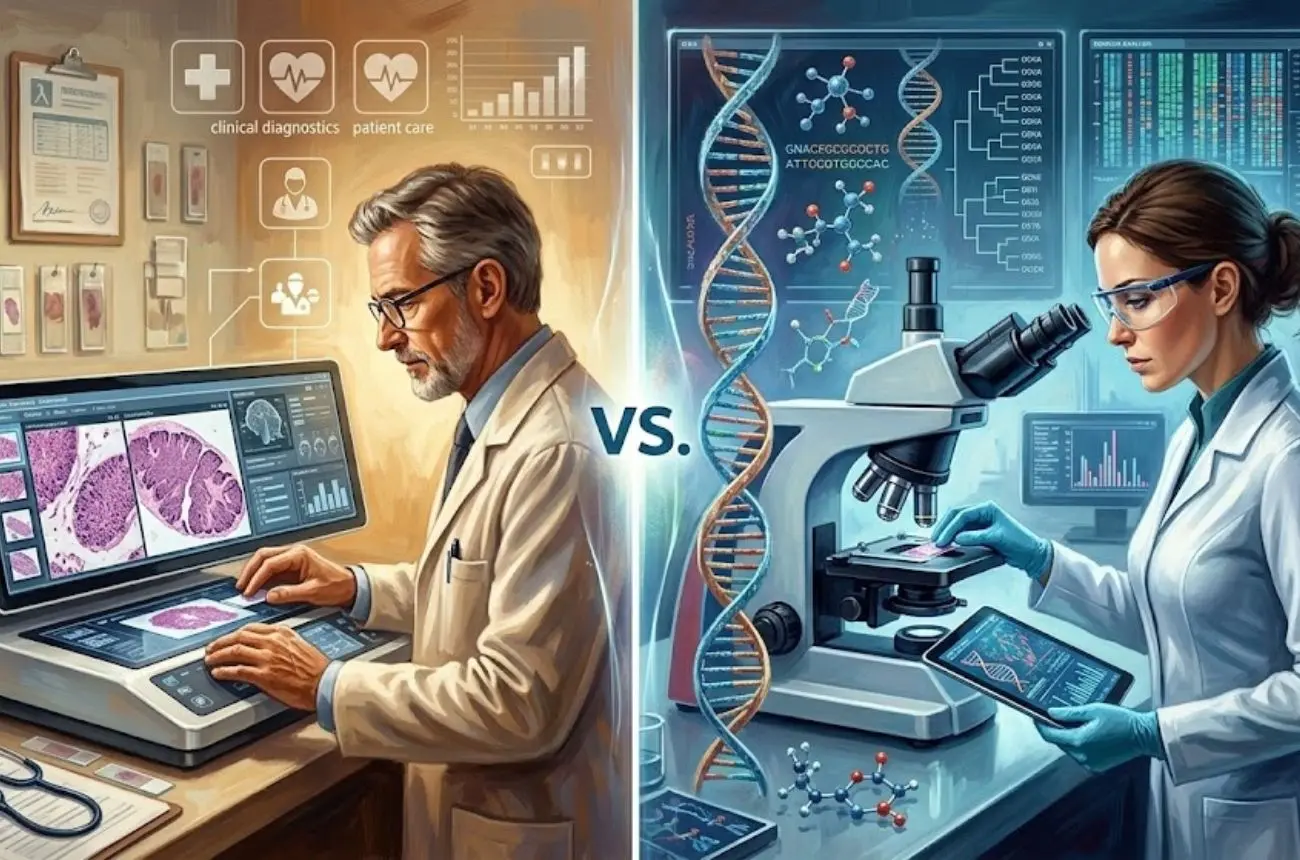
Clinical Digital Pathology Scanners

Clinical digital pathology scanners are built for diagnostic workflows in regulated healthcare environments. These systems integrate with Laboratory Information Systems (LIS) and must meet regulatory and validation requirements before being used for primary diagnosis.

In many regions, scanners carry certifications such as CE-IVDR marking, while laboratories in the United States commonly perform CLIA-compliant validation studies to confirm diagnostic concordance before adopting whole slide imaging for routine clinical use.

Reliability, consistency, and throughput are essential. In a clinical lab processing hundreds of slides per day, even small delays or inconsistent image quality can impact case turnaround time.

Typical characteristics of clinical scanners include:

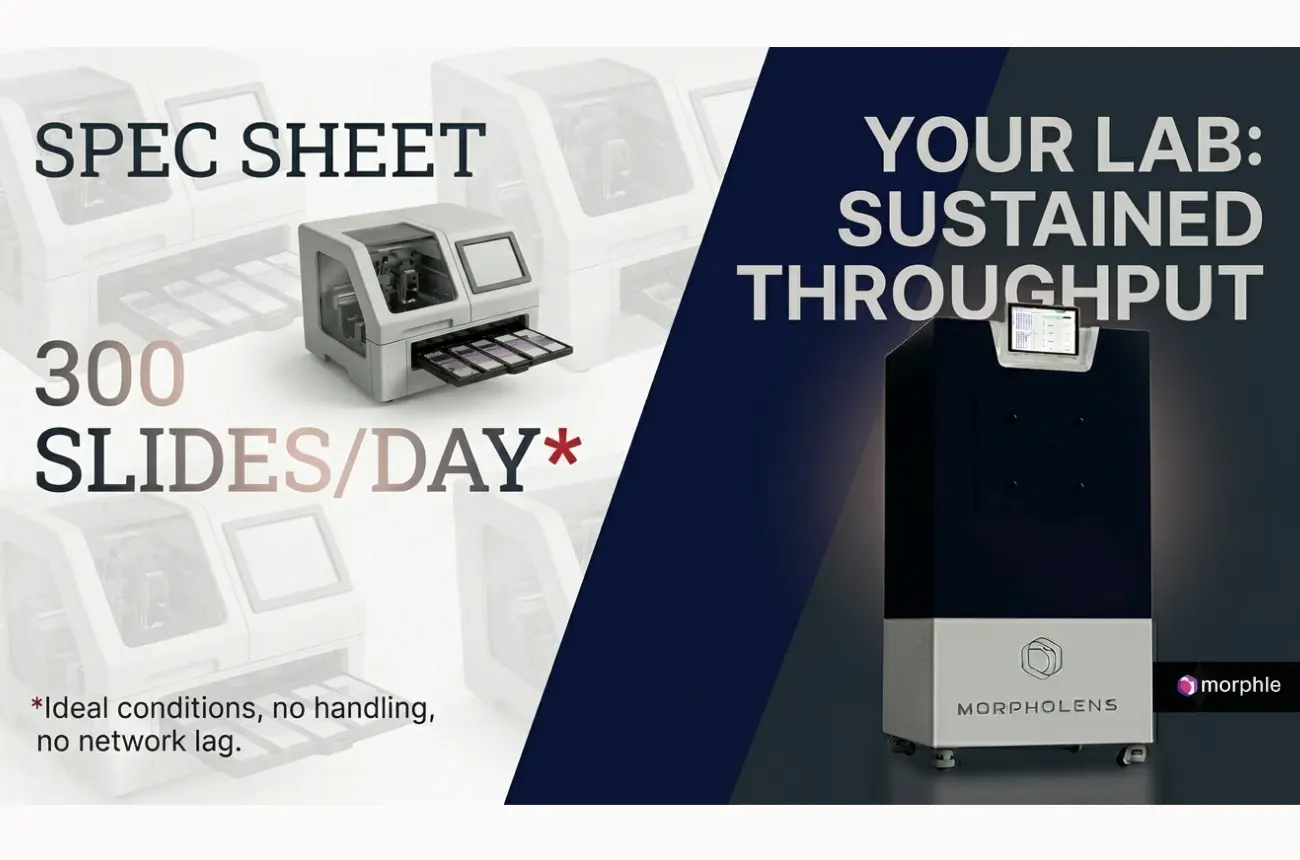
  • High-throughput scanning capable of 200–400+ slides per day

  • Scan speeds of roughly 90–120 seconds per slide at 40x

  • Consistent autofocus and color calibration across tissue sections

  • Seamless integration with LIS, PACS, and digital case management systems

  • Standardized brightfield imaging for routine histopathology workflows

For diagnostic use, reproducibility is critical. A clinical scanner must generate consistent, diagnostically reliable images across operators, batches, and staining variations.

Research Digital Pathology Scanners

Research scanners are designed primarily for scientific investigation rather than routine diagnostic workflows. Instead of prioritizing throughput and operational efficiency, these systems focus on flexibility and imaging precision.

Research-grade scanners are frequently used in projects involving:

  • Biomarker discovery and validation

  • Large-scale histology studies

  • Drug development and tissue response analysis

  • Computational pathology and AI model training

  • Academic collaborations and tissue atlas initiatives

In research environments, investigators may require:

  • Very high-resolution brightfield imaging

  • Multi-plane Z-stack scanning for thick tissue sections

  • Flexible scanning parameters for experimental protocols

  • Customizable image export formats for downstream analysis

While research scanners can provide extremely detailed imaging data, they may lack the automation, workflow integration, and operational robustness required for high-volume clinical diagnostics.

Applications: Who Needs What

Clinical Applications

Clinical digital pathology scanners support a growing range of diagnostic workflows, including:

  • Primary diagnosis in surgical pathology and cytology

  • Teleconsultation and remote second opinions

  • Digital archiving of histology slides for long-term records

  • Workload distribution across multi-site hospital networks

  • Quality assurance and proficiency testing programs

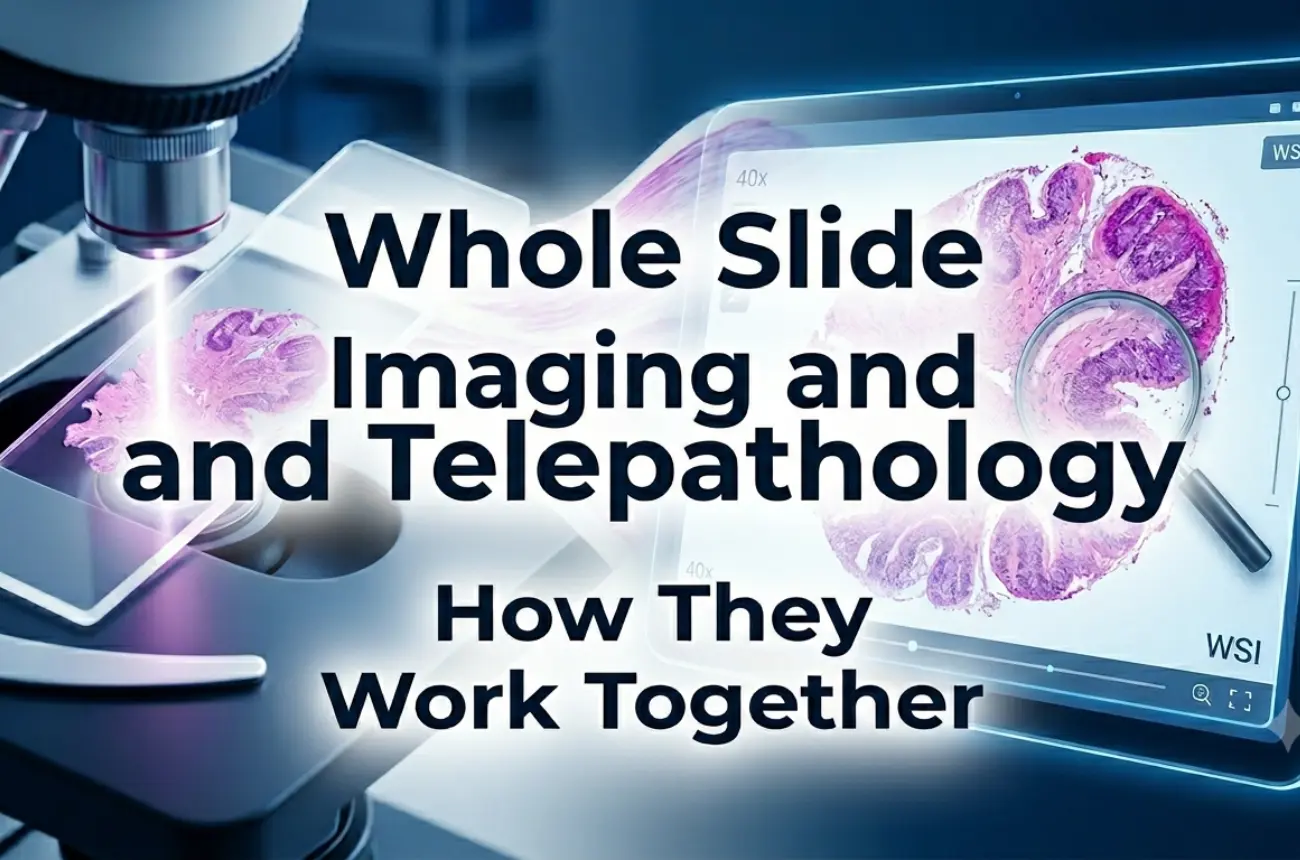
Whole slide imaging allows pathologists to review cases remotely and collaborate with specialists without transporting physical slides.

A typical Whole Slide Image (WSI) file may range from 1–3 GB depending on magnification and tissue area, making storage infrastructure an important part of any digital pathology deployment.

Research Applications

In research settings, slide scanners support workflows such as:

  • Histological characterization of experimental models

  • Quantitative image analysis for biomarker studies

  • Training machine learning and computational pathology models

  • Multi-institution research collaborations

  • Creation of large-scale histology datasets for scientific publications

Because research projects often generate very large imaging datasets, scanners are typically paired with data analysis pipelines and high-capacity storage infrastructure.

Benefits and Limitations at a Glance

Clinical Scanners

Benefits

  • Designed for high-volume diagnostic workflows

  • Consistent image quality suitable for routine pathology review

  • Integration with LIS and digital case management systems

  • Vendor support designed for clinical uptime requirements

Limitations

  • Less flexibility for experimental imaging protocols

  • Higher cost due to compliance, validation, and reliability requirements

Research Scanners

Benefits

  • Flexible scanning parameters for experimental workflows

  • High-resolution imaging suited for quantitative analysis

  • Useful for building datasets for computational pathology research

Limitations

  • Not optimized for high-throughput diagnostic workflows

  • Often require more manual configuration and technical expertise

  • Typically not validated for regulated clinical diagnosis

Buying Guide: Key Questions to Ask Before You Purchase

Before selecting a slide scanner, pathology labs should evaluate several operational and technical factors:

  1. What is the real-world scanning throughput?

  2. What magnification levels are supported?

  3. How well does the scanner integrate with your laboratory systems?

  4. What is the total cost of ownership?

  5. How robust is the autofocus system?

  6. Does the system support AI or computational pathology tools?.

  7. What storage infrastructure is required?

  8. What is the vendor's long-term roadmap?

Explore Digital Pathology with Morphle Labs

Whether your lab is transitioning to digital pathology for clinical diagnostics or building large-scale research datasets, choosing the right scanning platform is critical.

Morphle Labs provides high-throughput brightfield whole slide scanners designed for modern pathology workflows, with seamless integration, scalable infrastructure, and AI-ready image outputs.

👉 Request a personalized demo today and see how Morphle scanners can integrate into your lab’s workflow.

Visit www.morphlelabs.com to get started.

Learn more about digital pathology and various usecases

Read More
Contact Us
Afghanistan (+93)
Albania (+355)
Algeria (+213)
American Samoa (+1-684)
Andorra (+376)
Angola (+244)
Anguilla (+1-264)
Antarctica (+672)
Antigua and Barbuda (+1-268)
Argentina (+54)
Armenia (+374)
Aruba (+297)
Australia (+61)
Austria (+43)
Azerbaijan (+994)
Bahamas (+1-242)
Bahrain (+973)
Bangladesh (+880)
Barbados (+1-246)
Belarus (+375)
Belgium (+32)
Belize (+501)
Benin (+229)
Bermuda (+1-441)
Bhutan (+975)
Bolivia (+591)
Bosnia and Herzegovina (+387)
Botswana (+267)
Brazil (+55)
British Indian Ocean Territory (+246)
Brunei (+673)
Bulgaria (+359)
Burkina Faso (+226)
Burundi (+257)
Cambodia (+855)
Cameroon (+237)
Canada (+1)
Cape Verde (+238)
Cayman Islands (+1-345)
Central African Republic (+236)
Chad (+235)
Chile (+56)
China (+86)
Christmas Island (+53)
Cocos Islands (+61)
Colombia (+57)
Comoros (+269)
Congo (DRC) (+243)
Congo (Republic) (+242)
Cook Islands (+682)
Costa Rica (+506)
Cote D'Ivoire (+225)
Croatia (+385)
Cuba (+53)
Cyprus (+357)
Czech Republic (+420)
Denmark (+45)
Djibouti (+253)
Dominica (+1-767)
Dominican Republic (+1-809 and +1-829  )
East Timor (+670)
Ecuador (+593 )
Egypt (+20)
El Salvador (+503)
Equatorial Guinea (+240)
Eritrea (+291)
Estonia (+372)
Ethiopia (+251)
Falkland Islands (+500)
Faroe Islands (+298)
Fiji (+679)
Finland (+358)
France (+33)
French Guiana (+594)
French Polynesia (+689)
Gabon (+241)
Gambia (+220)
Georgia (+995)
Germany (+49)
Ghana (+233)
Gibraltar (+350)
Greece (+30)
Greenland (+299)
Grenada (+1-473)
Guadeloupe (+590)
Guam (+1-671)
Guatemala (+502)
Guinea (+224)
Guinea-Bissau (+245)
Guyana (+592)
Haiti (+509)
Honduras (+504)
Hong Kong (+852)
Hungary (+36)
Iceland (+354)
India (+91)
Indonesia (+62)
Iran (+98)
Iraq (+964)
Ireland (+353)
Israel (+972)
Italy (+39)
Jamaica (+1-876)
Japan (+81)
Jordan (+962)
Kazakhstan (+7)
Kenya (+254)
Kiribati (+686)
Kuwait (+965)
Kyrgyzstan (+996)
Laos (+856)
Latvia (+371)
Lebanon (+961)
Lesotho (+266)
Liberia (+231)
Libya (+218)
Liechtenstein (+423)
Lithuania (+370)
Luxembourg (+352)
Macau (+853)
Macedonia (+389)
Madagascar (+261)
Malawi (+265)
Malaysia (+60)
Maldives (+960)
Mali (+223)
Malta (+356)
Marshall Islands (+692)
Martinique (+596)
Mauritania (+222)
Mauritius (+230)
Mayotte (+269)
Mexico (+52)
Micronesia (+691)
Moldova (+373)
Monaco (+377)
Mongolia (+976)
Montserrat (+1-664)
Morocco (+212)
Mozambique (+258)
Myanmar (+95)
Namibia (+264)
Nauru (+674)
Nepal (+977)
Netherlands (+31)
Netherlands Antilles (+599)
New Caledonia (+687)
New Zealand (+64)
Nicaragua (+505)
Niger (+227)
Nigeria (+234)
Niue (+683)
Norfolk Island (+672)
Northern Mariana Islands (+1-670)
North Korea (+850)
Norway (+47)
Oman (+968)
Pakistan (+92)
Palau (+680)
Palestinian State (+970)
Panama (+507)
Papua New Guinea (+675)
Paraguay (+595)
Peru (+51)
Philippines (+63)
Poland (+48)
Portugal (+351)
Puerto Rico (+1-787 or +1-939)
Qatar (+974 )
Reunion (+262)
Romania (+40)
Russia (+7)
Rwanda (+250)
Saint Helena (+290)
Saint Kitts and Nevis (+1-869)
Saint Lucia (+1-758)
Saint Pierre and Miquelon (+508)
Saint Vincent and the Grenadines (+1-784)
Samoa (+685)
San Marino (+378)
Sao Tome and Principe (+239)
Saudi Arabia (+966)
Senegal (+221)
Serbia (+381)
Seychelles (+248)
Sierra Leone (+232)
Singapore (+65)
Slovakia (+421)
Slovenia (+386)
Solomon Islands (+677)
Somalia (+252)
South Africa (+27)
South Korea (+82)
South Sudan (+211)
Spain (+34)
Sri Lanka (+94)
Sudan (+249)
Suriname (+597)
Svalbard and Jan Mayen Islands (+47)
Swaziland (+268)
Sweden (+46)
Switzerland (+41)
Syria (+963)
Taiwan (+886)
Tajikistan (+992)
Tanzania (+255)
Thailand (+66)
Togo (+228)
Tokelau (+690)
Tonga (+676)
Trinidad and Tobago (+1-868)
Tunisia (+216)
Turkey (+90)
Turkmenistan (+993)
Turks and Caicos Islands (+1-649)
Tuvalu (+688)
Uganda (+256)
Ukraine (+380)
United Arab Emirates (+971)
United Kingdom (+44)
United States (+1)
Uruguay (+598)
Uzbekistan (+998)
Vanuatu (+678)
Vatican City State (+418)
Venezuela (+58)
Vietnam (+84)
Virgin Islands, British (+1-284)
Virgin Islands, United States (+1-340)
Wallis and Futuna Islands (+681)
Western Sahara (+212)
Yemen (+967)
Zambia (+260)
Zimbabwe (+263)