Not every lab needs a high-throughput scanner. For laboratories processing around 10–15 slides per day, choosing the right digital pathology scanner is about affordability, reliability, and a clear upgrade path. This guide explains how small-volume labs can adopt whole slide scanning efficiently; without overpaying; while staying ready to scale as workloads grow.
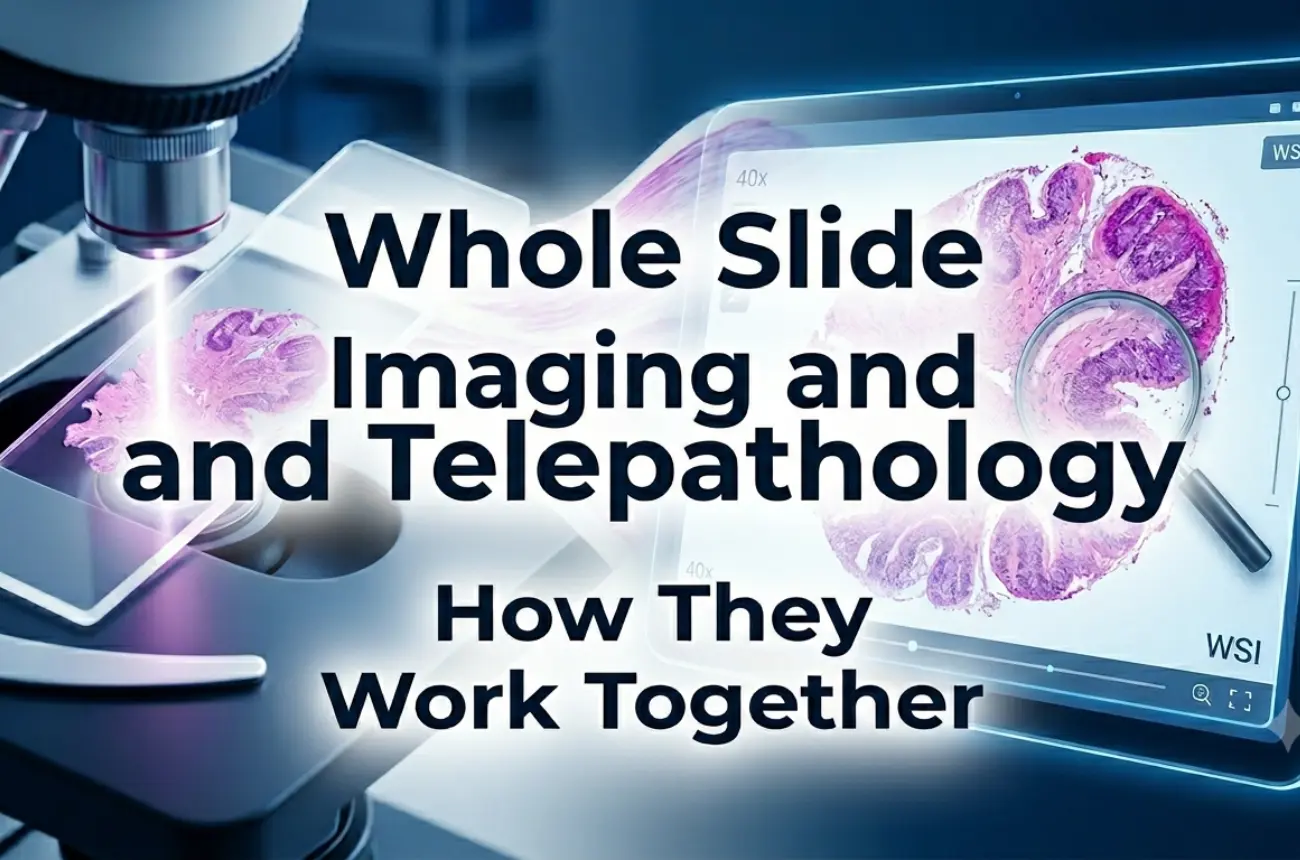
A digital pathology scanner converts glass slides into high-resolution digital images that can be viewed, shared, archived, and analyzed.
Whole Slide Scanning refers to capturing the entire tissue section at diagnostic resolution, enabling virtual microscopy.
A pathology slide scanner, slide scanner histology, microscope scanner, or histology scanner are terms often used interchangeably to describe scanners used in pathology workflows.
An automated microscope slide scanner reduces manual handling by automating focus, scanning, and image processing.
Digital pathology scanner price includes not just the hardware, but software licenses, storage, service, and long-term upgrade options.
Labs scanning around 15 slides per day typically include:
In these environments, slides are scanned intermittently; not in continuous batches. The workflow prioritizes:
A compact whole slide scanner fits seamlessly into such workflows without adding operational complexity.
At low volumes, clarity, focus accuracy, and color fidelity matter more than raw speed. A single-slide digital pathology scanner can deliver excellent diagnostic quality without the cost of high-capacity robotics.
Small labs often lack dedicated IT or digital pathology specialists. An intuitive interface and minimal calibration needs are essential.
Compact scanners fit easily into existing lab spaces and require less supporting infrastructure.
Smooth viewing and simple sharing are more important than massive local storage for most 15-slide/day labs.
For many labs, these limitations are acceptable; and temporary.
Even small labs must meet quality and compliance expectations. A digital pathology scanner should support:
Starting small does not mean compromising on diagnostic integrity.
Low-throughput scanners are well suited for:
In these use cases, flexibility and affordability matter more than speed.
When evaluating options from digital pathology companies, small labs should ask:
Avoid overbuying capacity you won’t use.
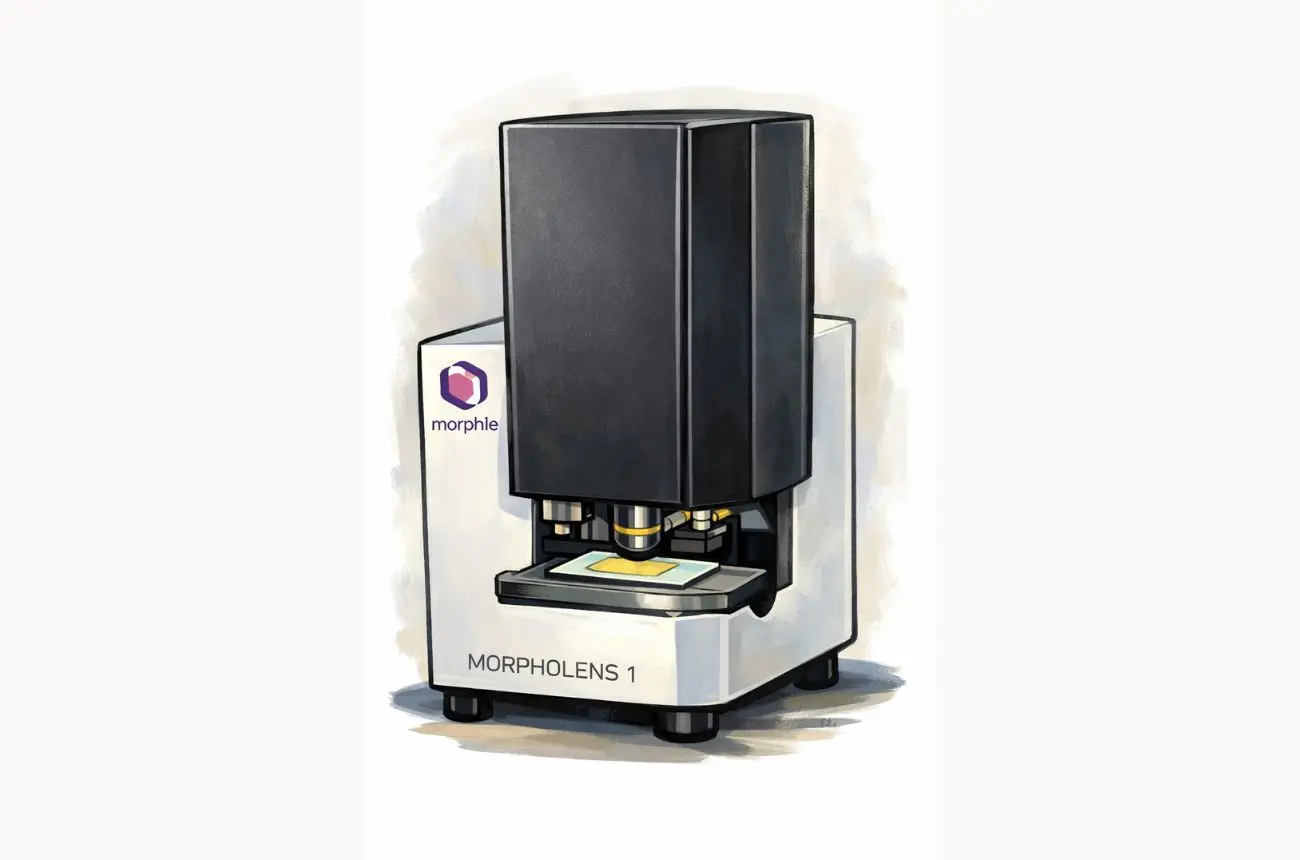
For labs scanning around 15 slides per day, MorphoLens 1 offers an ideal entry into digital pathology.
MorphoLens 1 is a single-slide digital pathology scanner designed for affordability, reliability, and ease of use. It delivers high-quality whole slide scanning without the complexity or cost of multi-slide systems; making it well suited for small-volume histology labs, research institutes, and teaching environments.
What truly sets Morphle apart is its upgrade-friendly approach. Labs can start with MorphoLens 1 and, as workloads grow, trade in their system toward higher-capacity scanners such as 6-slide or higher-throughput models; without losing their initial investment. This protects budgets while supporting long-term growth.
By offering affordable scanners with a clear scaling path, Morphle enables labs to adopt digital pathology confidently, at their own pace.
Learn more about MorphoLens 1
Digital pathology adoption is no longer limited to large reference centers. Key trends include:
Single-slide scanners will continue to play a critical role in this transition.
For labs scanning around 15 slides per day, the best digital pathology scanner is one that balances quality, cost, and scalability. Starting with a compact, affordable solution allows labs to adopt digital workflows without risk—while staying ready for future growth.
Request a quote for MorphoLens 1:
https://morphlelabs.com/digital-pathology/get-quote-morpholens-1-scanner


.webp)
.webp)
.webp)
.webp)
.webp)
.webp)